Japanese is the native language of over 120 million people and serves as the national language of Japan—one of the world’s largest economies and a major contributor to global trade, innovation, and investment. Beyond its economic importance, Japanese has become a global cultural force through the worldwide popularity of anime, video games, film, and design, making it one of the most sought-after world languages among U.S. employers.
Japanese Language at UCLA
The Japanese language program at UCLA has a long and distinguished history, dating back to the university’s postwar expansion of Asian language instruction in the late 1940s. Japanese language courses grew steadily alongside increasing academic and cultural interest in Japan. In 1991, the establishment of the Paul I. and Hisako Terasaki Center for Japanese Studies further strengthened the program, promoting research, teaching, and community engagement related to Japan. Today, Japanese is one of the largest and most comprehensive language programs at UCLA, offering multiple levels of instruction from beginning to advanced, along with courses in linguistics, literature, and cultural studies. The Japanese program plays a central role in fostering cross-cultural understanding and supporting UCLA’s broader commitment to global education.
The Japanese language program is designed to develop students’ linguistic and cultural competence while fostering global citizens who are critical and creative thinkers, effective communicators, and collaborative learners. These include:
- Language Proficiency: Develop strong skills in speaking, listening, reading, and writing in Japanese, enabling effective and contextually appropriate communication in diverse situations.
- Cultural Understanding: Deepen understanding of Japanese society, culture, and global influence through engagement with authentic materials, media, and cultural practices.
- Career Preparation: Equip students with language proficiency and analytical skills applicable to academic and professional fields such as business, education, and international relations.
- Global Competence: Promote intercultural awareness, critical thinking, and responsible global citizenship through reflective and collaborative learning experiences.
- Real-Life Application: Offer students meaningful opportunities to use their language skills and cultural knowledge in real-world contexts.
Japanese Language Instructional Faculty
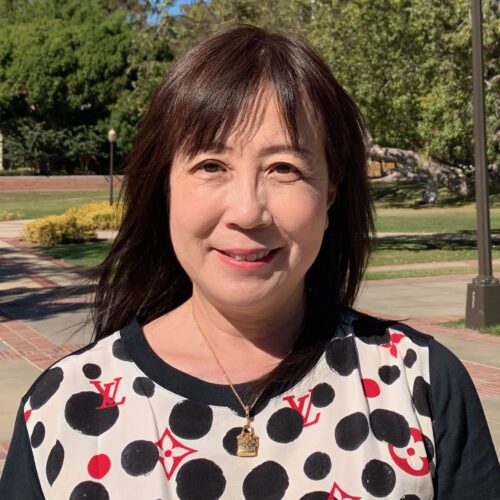
Asako Hayashi-Takakura
Senior Lecturer
Japanese, Heritage Language/Bilingualism
asakoha@g.ucla.edu

Yumiko Kawanishi
Senior Lecturer
Japanese language
kawanish@humnet.ucla.edu

Yoko Nogami
Lecturer
nogami@humnet.ucla.edu
Mai Takeuchi
Lecturer
Japanese language
takeuchim@ucla.edu
Yuki Taylor
Lecturer
Japanese language
yukit@g.ucla.edu
Curricular Roadmap
The core of the Japanese language program is a three-level sequence designed to develop comprehensive language proficiency through progressive study.
Students with no prior knowledge of Japanese should enroll in Japanese 1, which is offered every Fall quarter. Students with prior knowledge of Japanese through coursework at other institutions or self-study should take the placement exam, offered every Fall and Winter, to determine appropriate course placement.
Beyond the core sequence—Japanese 1-2-3 (Elementary Modern Japanese), 4-5-6 (Intermediate Modern Japanese), and 100A-100B-100C (Advanced Modern Japanese)—the program offers advanced and specialized courses, including Japanese 101A-B (Advanced Reading), which can be taken out of sequence.
We also offer courses for heritage or non-heritage speakers who are fluent in everyday spoken Japanese: J105A-B, which may be taken out of sequence. Enrollment is by placement exam only. Enrollment in all courses beyond Japanese 1 requires completion of prerequisites or a placement exam.
Textbooks
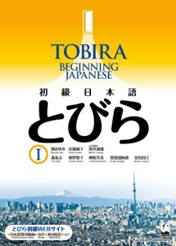
Japanese 1-2-3: TOBIRA I: Beginning Japanese
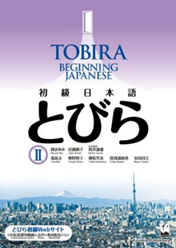
Japanese 4-5-6: TOBIRA II: Beginning Japanese
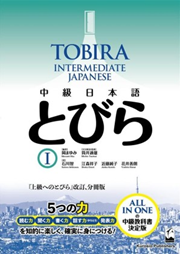
Japanese 100A-100B-100C: TOBIRA I: Intermediate Japanese & TOBIRA II: Intermediate Japanese (scheduled for publication in August 2026)
Additional Resources
- Link to Japanese Major
- Link to Center for Japanese Studies
- Link to TALMA program
- Link to Japanese Graduate PRogram
- Link to EA Linguistics Graduate Program